Foundational hypothesis
Dewcell
A power system built one cell at a time.
Explore ambient moisture as hydrogen feedstock for a massively parallel MEMS fusion concept.
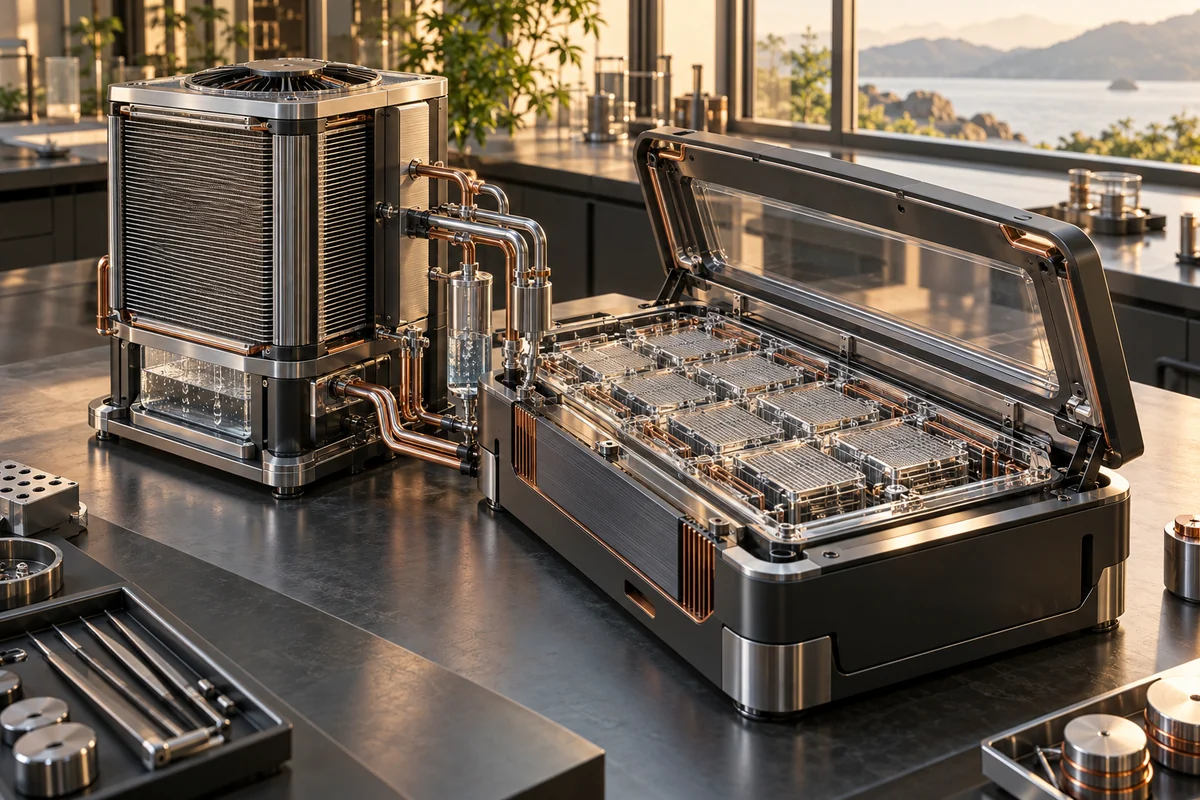
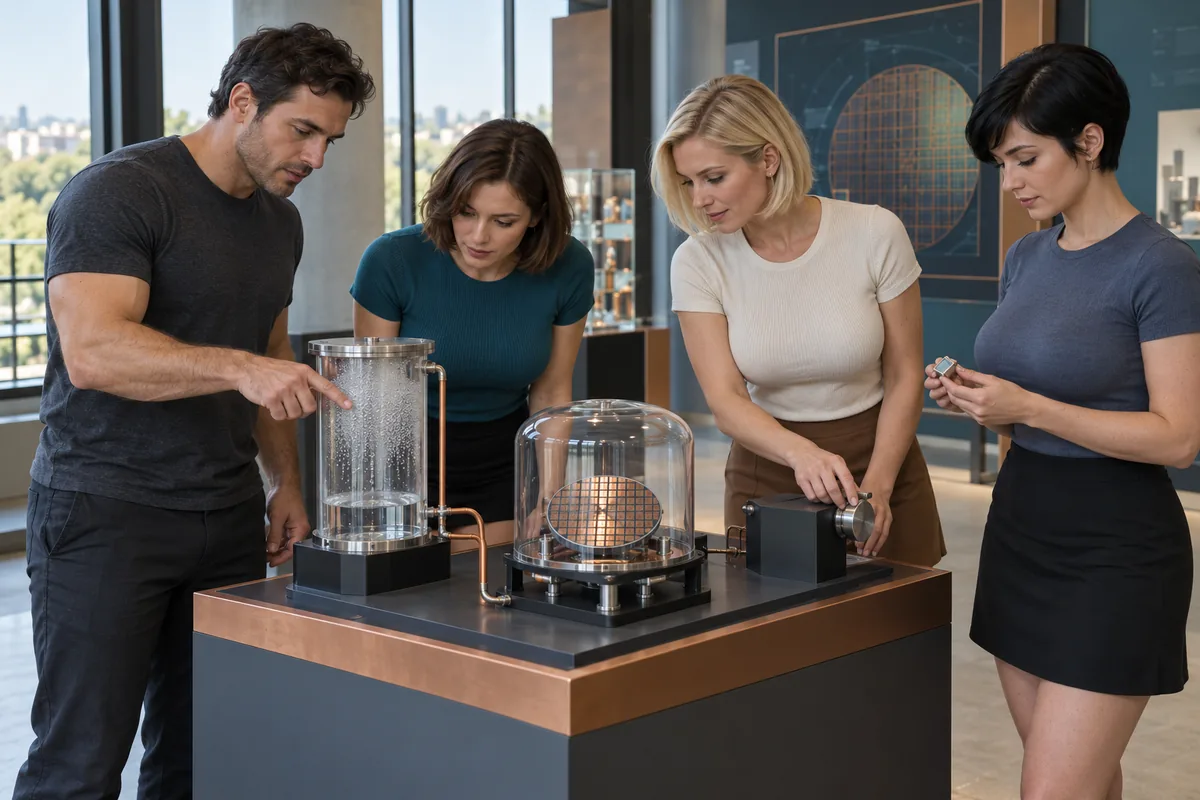

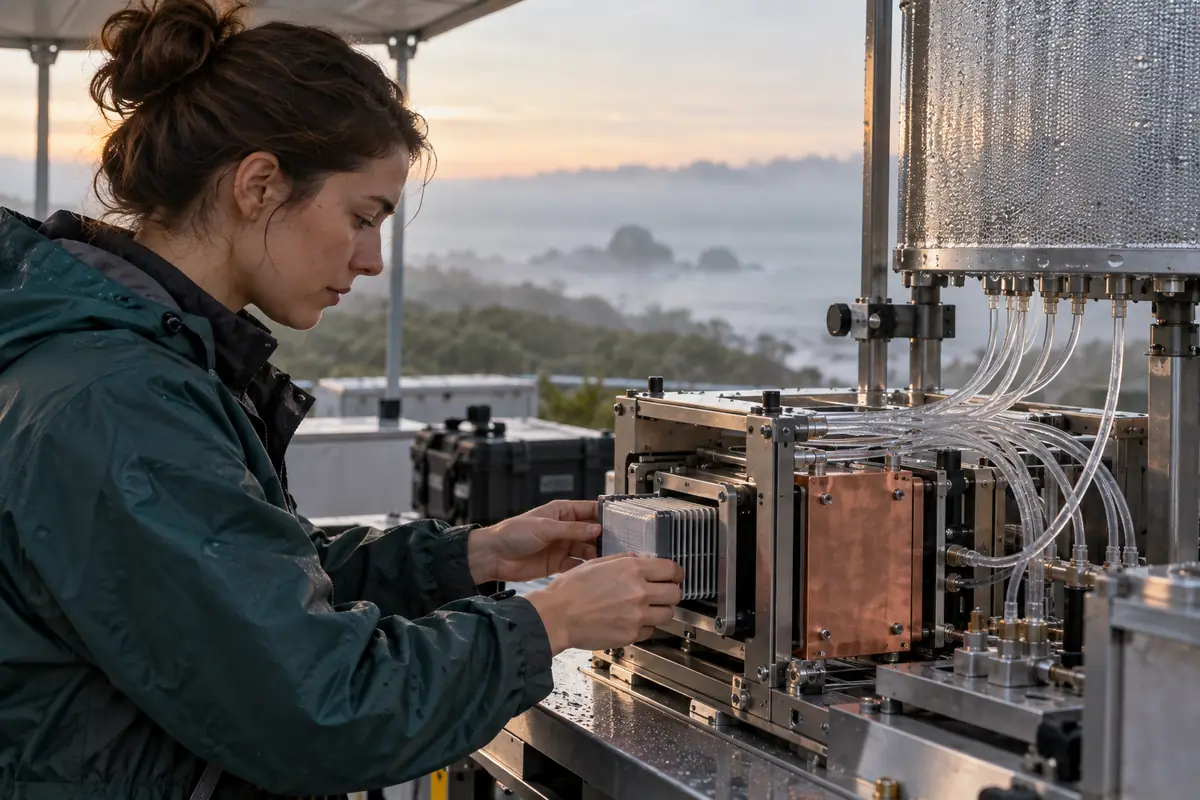
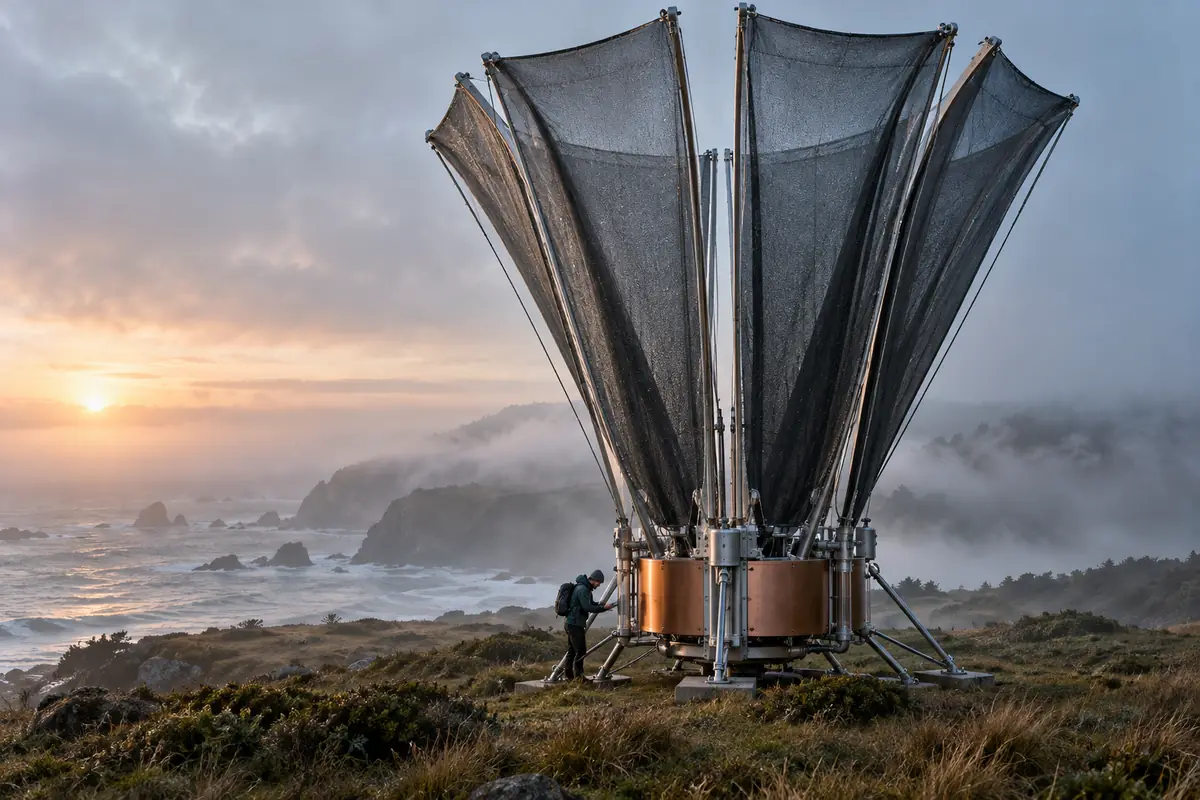
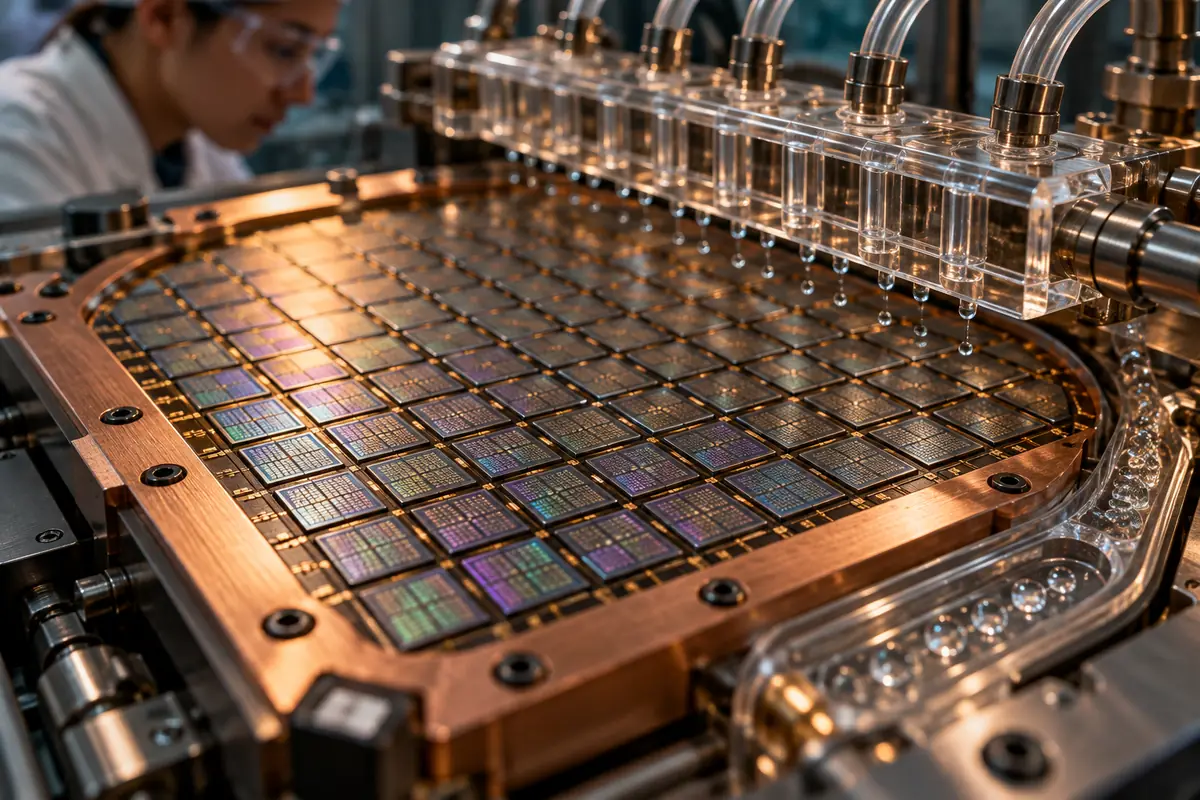
AI-generated concept imagery · imagined settings and equipment
Next review · October 2, 2026
A reaction, feedstock and complete energy-accounting sheet
Awaiting reaction specification · Lead: Ben Đ Om
Acceptance: State every input, output, proposed reaction product and the null result before selecting an apparatus.
Resources: Specification only. This is a planning allowance, not a funded commitment.
Download the experiment work pack · View the next work cycle
The vision
What this could become.
The proposed architecture collects atmospheric moisture, prepares a controlled feedstock, and distributes it across many microfabricated cells. The ambition is a compact, manufacturable energy system whose scale grows by replication of a verified cell.
Begin today
The first concrete step.
Write the reaction and energy accounting; characterize water collection and feed preparation separately. Define a single-cell measurement that can distinguish the proposed nuclear process from electrical, chemical, and environmental heating.
The LSM connection
This project depends directly on an unverified LSM hypothesis: that a specific controllable particle interaction can produce useful fusion under conditions compatible with a microfabricated device. The detailed fusion models remain in the staff research area.
Current evidence & open ground
Moisture is proposed feedstock, not an energy source by itself. Collection and hydrogen preparation consume energy. A MEMS array does not establish fusion or net power; both require reproducible measurements, identifiable reaction products, and a complete system energy balance.
DOE — fusion reactions ↗Established fusion background; it does not validate the proposed MEMS mechanism.
DOE — deuterium and tritium fuel ↗Background on hydrogen isotopes and conventional fusion fuels.
Questions that move the work forward
- What reaction, products, and event rate does the model predict before an experiment?
- Can a single cell produce independently reproducible evidence beyond known backgrounds?
- After collection, control, conversion, and cooling losses, does total useful output exceed total input?
The scaling equation
Pnet = N × Pcell,useful − Pcollection − Ppreparation − Pcontrol − Pcooling. This is an accounting framework, not a performance forecast. Include heat rejection and the cumulative planetary heat budget in any deployment study.
Proposed milestones / not completed results
A path to evidence.
Close the accounting
A feedstock, reaction, and uncertainty ledger with a defined null result.
Advance when: Audit conservation laws and every external energy input.
Test one cell
A qualified laboratory measurement program with controls and independent replication.
Advance when: Require consistent calorimetry and reaction-product evidence before claiming fusion.
Scale only a verified result
An array model including cell variation, thermal coupling, and maintenance.
Advance when: Measure net system power; multiplication of an unverified effect is not validation.
Visitor feedback
Comments or suggestions?
Share your thoughts on Dewcell. Your message goes to the site owner’s private inbox.
No sign-in required. Your message and optional contact details are saved privately for review, not published. Add an email address if you would like a reply; a response is not guaranteed. Please avoid sensitive information.