Prototype definition
kW into kC
Turn energy abundance into food for everyone.
Free public nutrition stations serving clean drinking water and algae-based pellets, formulated for complete nourishment.
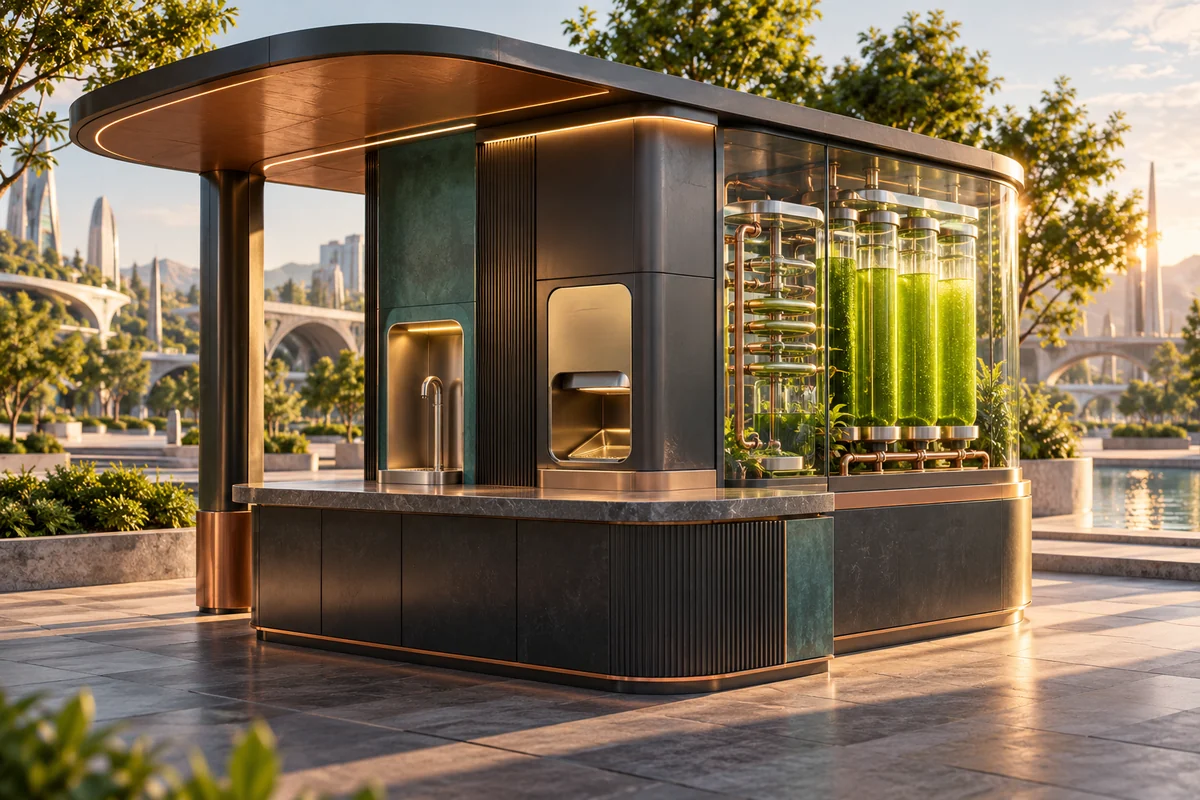
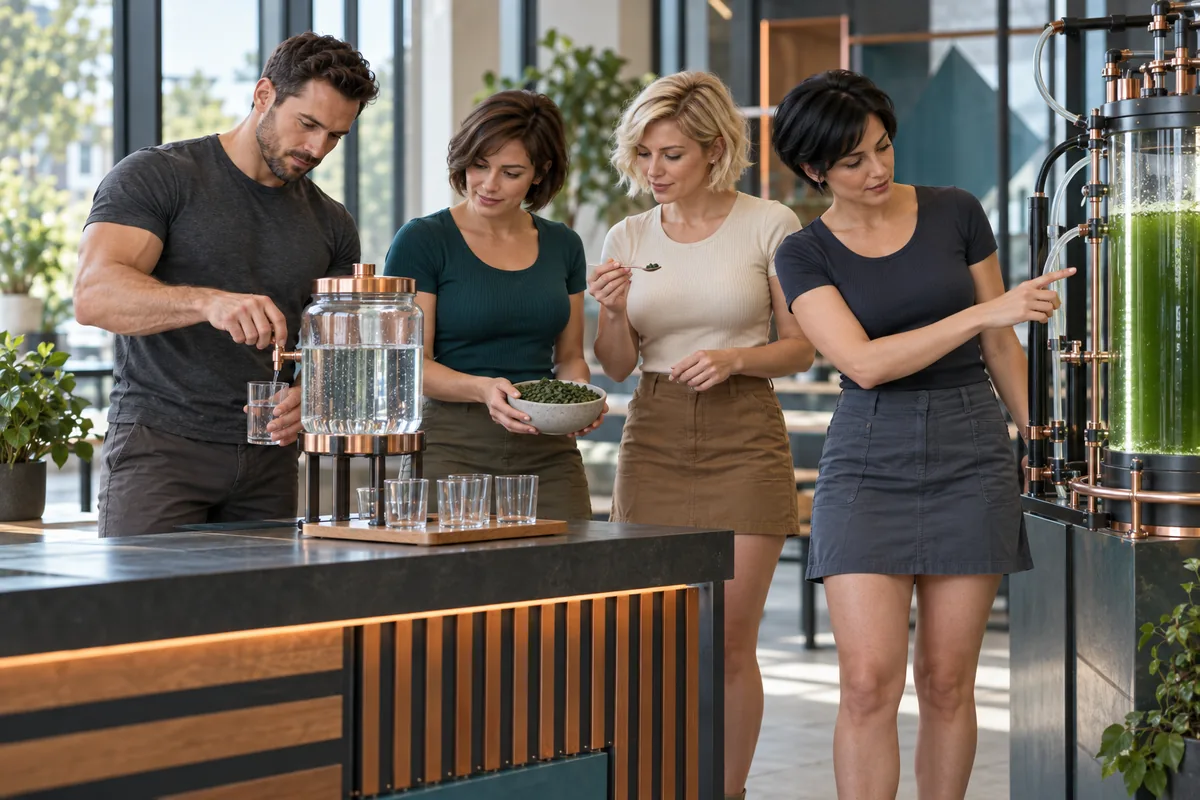
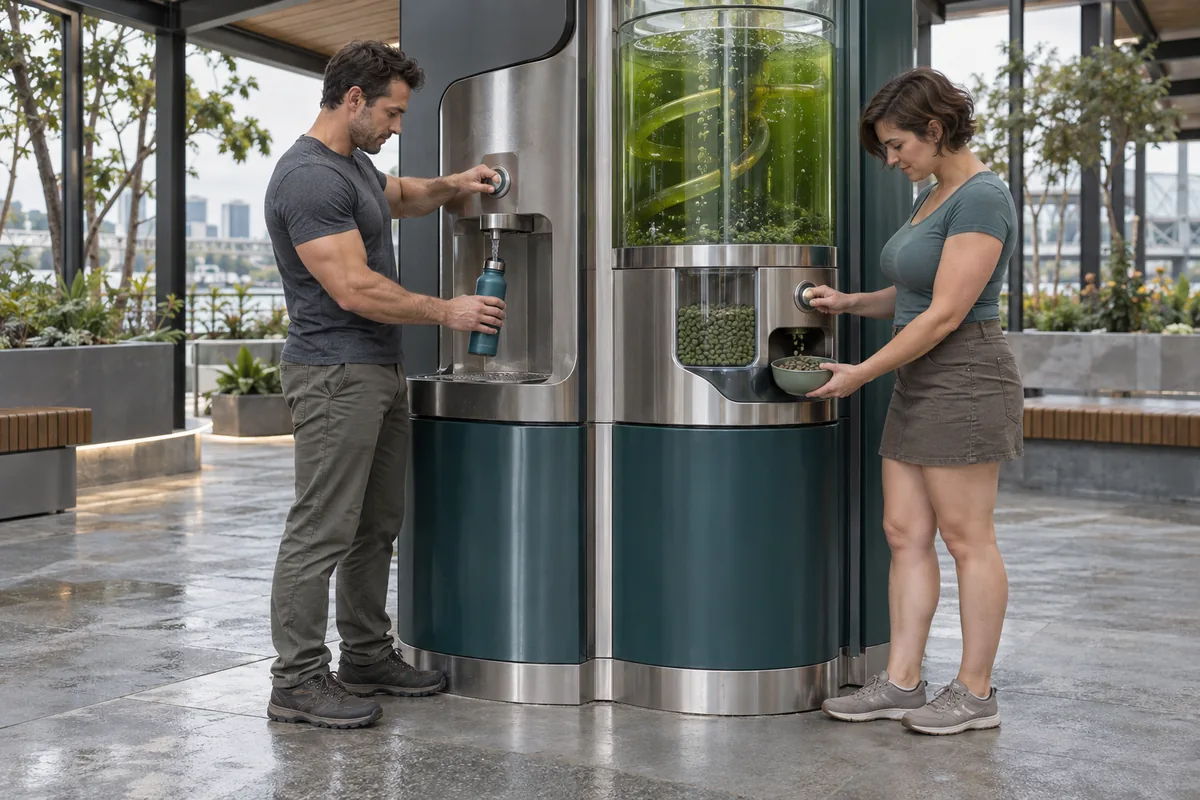
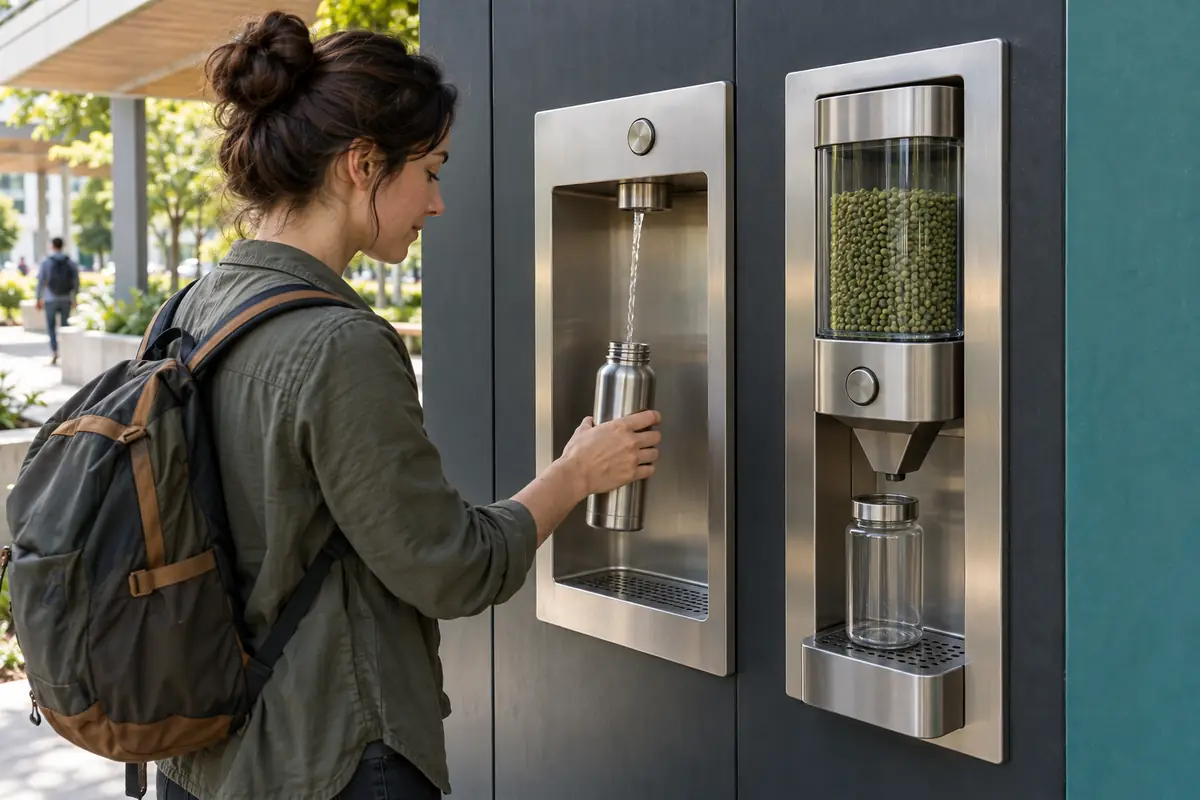
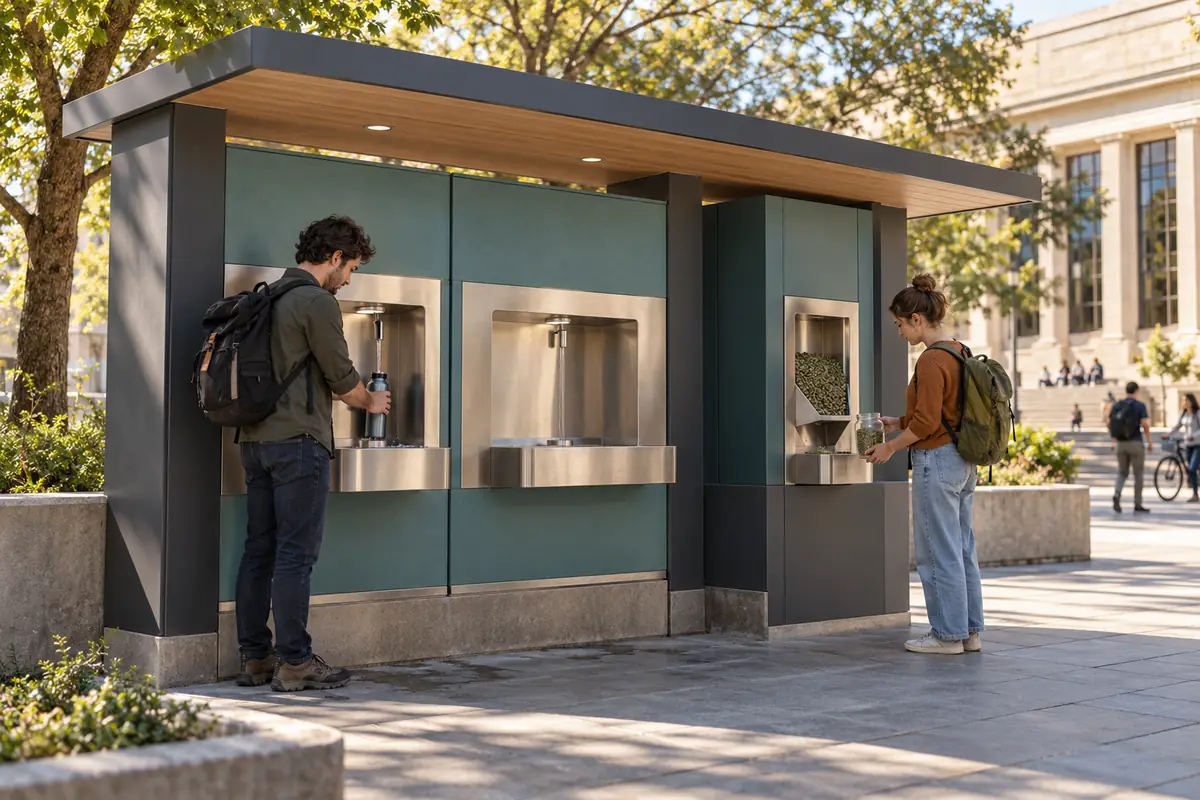
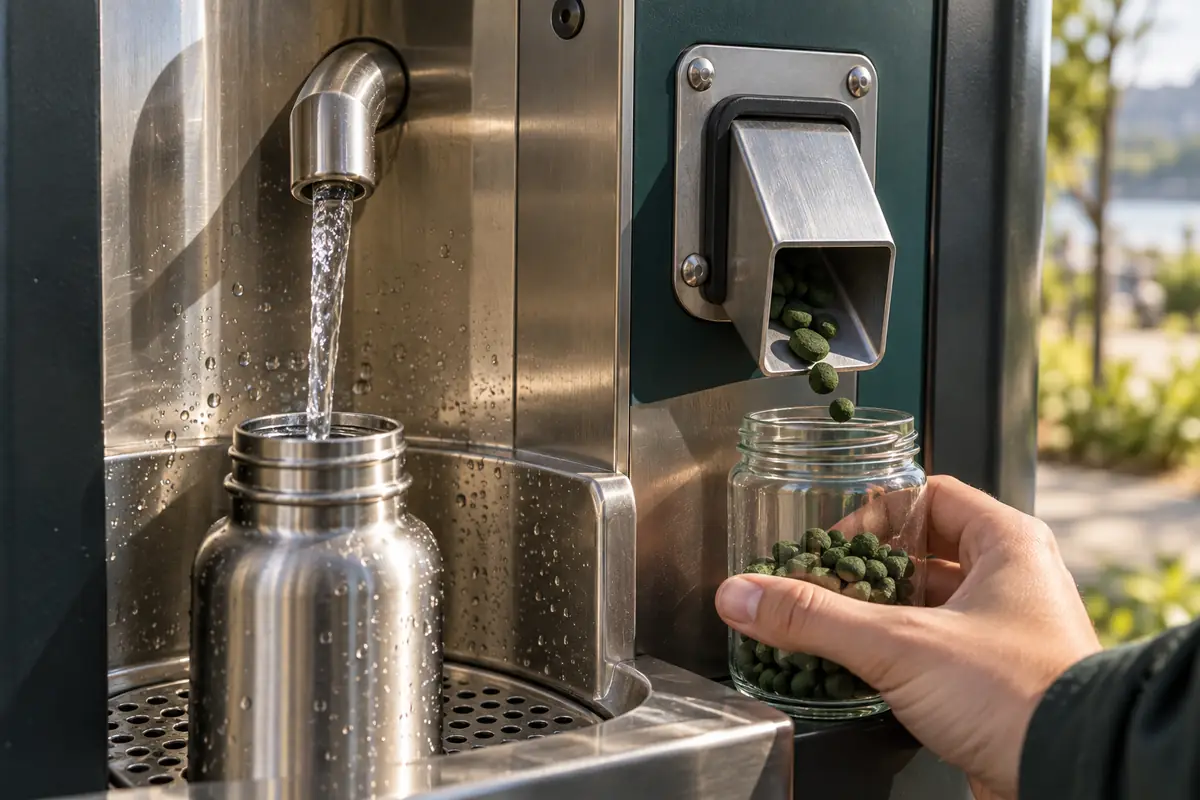
AI-generated concept imagery · imagined settings and equipment
Next review · October 2, 2026
One station cost sheet and a food-formulation partner brief
Queued · Lead: Ben Đ Om
Acceptance: Define intended users, servings, nutrient requirements, traceability, water source and operating costs.
Resources: Planning only; no food distribution started. This is a planning allowance, not a funded commitment.
Download the experiment work pack · View the next work cycle
The vision
What this could become.
Make a reliable source of food and water as ordinary and accessible as a public fountain. Walk up, fill a bottle, receive a portion, and continue your day. A network of simple, durable stations supplies algae-based food at zero price to the person eating it, creating a dependable nutritional foundation wherever hunger persists.
Begin today
The first concrete step.
Specify one public station and one food formulation with qualified food-science and nutrition partners. Start with traceable food-grade ingredients and a tested potable-water supply. In parallel, measure a small algae-production line’s edible yield, energy use, water use, processing losses, and final nutrient content.
The LSM connection
The program connects the prospect of abundant LSM-based fusion power to a concrete human benefit: reliable access to food and water. Existing energy can power the first pilot. Biology still requires carbon, water, minerals, nutrients, and suitable growth conditions; the project converts energy and feedstocks into food rather than assuming that energy alone supplies matter.
Current evidence & open ground
Nutritionally complete algae-based pellets are a formulation and validation goal. Algae alone cannot be assumed to provide every nutrient in the right amount and usable form for every person. The recipe may need complementary ingredients and fortification, with defined serving sizes and intended users. Ending hunger also requires dependable funding, distribution, acceptance, and access.
FAO — future food sources and food safety ↗A framework for assessing new production methods, nutritional quality, and food safety.
WHO — drinking-water ↗Safe and reliably available drinking water as a public-health foundation.
FDA — blue-green algae products ↗A reason to control strain selection, contamination, and batch testing instead of assuming all algal biomass is edible.
Questions that move the work forward
- Which edible strains and complementary ingredients produce a complete, digestible, appealing formulation at a realistic serving size?
- How many verified edible kilocalories reach people per kWh, litre of water, and unit of operating cost?
- Can the dispenser remain hygienic and available with simple servicing and a dependable reserve supply?
- How do different communities want to eat the product, and what texture or formulation adaptations improve access?
A public utility for nourishment
The intended experience is free at the point of use, with no purchase, account, work requirement, or personal-data exchange. Publish the real operating cost and who funds it. Use enclosed dispensing, accessible controls, bottle and bowl refills, and clear ingredient and serving information. Offer a rehydratable or softer form where pellets are unsuitable; nutrition should remain accessible to the person using the station.
From cultivation to a public portion
| Layer | What it does | What must be measured |
|---|---|---|
| Food production | Food-grade algae cultivation using light, carbon dioxide, water, and controlled mineral nutrients; compare sunlight, supplemental lighting, and fully powered operation. | Edible dry yield, culture stability, feedstocks, water use, and energy. |
| Nutrition formulation | Harvest and process the biomass; blend and fortify as needed; form palatable pellets or a rehydratable alternative. | Usable energy, protein quality, essential fats, vitamins, minerals, digestibility, and finished-product stability. |
| Public station | Dispense released food batches and separately treated potable water through cleanable, accessible equipment. | Food and water quality at dispensing, stock availability, waste, maintenance, and user acceptance. |
The first station can receive food from a central qualified producer. Compare that design with cultivation on site; growing algae inside every dispenser may add maintenance without improving access. Keep the drinking-water circuit separate from the culture system, with testing at the point people fill their containers.
Define “complete” as a testable specification
Set nutritional targets for a defined population and amount of food. Verify the whole recipe, including whether processing preserves nutrients and whether people can absorb them. Include validated vitamin B12 and other nutrients that an algae-only recipe may not reliably supply. Infant feeding, pregnancy, allergies, and clinical diets require separate assessment; one universal pellet is not an established result.
kW into kC: keep the units honest
kW into kC is the project name; the food-energy unit in calculations is kcal. Kilowatts measure power, so production also needs a time interval. Using the thermochemical calorie, 1 kWh equals approximately 860 kcal as an energy-unit conversion. It does not mean 1 kWh of electricity produces that much edible food.
Measure the real yield
Y = edible kcal delivered / kWh used
Include cultivation, lighting, water treatment, harvesting, processing, storage, distribution, and dispensing. Report sunlight and external food ingredients separately: their energy is not generated by the electrical input. Count food lost before it reaches a person.
Food security is the outcome
Start with one funded, maintained station, then expand with community partners and a reserve supply that keeps service running during production outages. Publish cost per usable portion, service availability, and the number of people who gain dependable access to food and water. Nutritional and food-insecurity outcomes require appropriate evaluation, not just a count of dispensed pellets.
Haven provides a natural first location, Skyway could distribute supplies, and Earth Radiator accounts for production heat and eventual metabolic heat without double counting. Abundant power supports the system; dependable access is what makes it useful.
Proposed milestones / not completed results
A path to evidence.
Formulate nourishment
A proposed algae-based recipe with defined users, portions, complete nutrient specifications, and batch traceability.
Advance when: Verify nutrient content, bioavailability assumptions, palatability, allergens, and relevant contaminant limits with qualified independent review.
Prove the production ledger
A metered cultivation, harvesting, preparation, and pellet-forming trial.
Advance when: Report edible kcal delivered, energy, water, feedstocks, waste, cost, and shelf life rather than raw biomass yield alone.
Open one free station
A maintained drinking-water refill point and enclosed dispenser supplied with released, traceable food batches.
Advance when: Verify point-of-dispense water quality, hygienic operation, food access, uptime, and user acceptance before expanding.
Build a dependable network
A replicable station design, accountable funding, local operators, backup stocks, and distribution connections.
Advance when: Demonstrate sustained nutritional access and community benefit across varied locations, not merely installed equipment.
Visitor feedback
Comments or suggestions?
Share your thoughts on kW into kC. Your message goes to the site owner’s private inbox.
No sign-in required. Your message and optional contact details are saved privately for review, not published. Add an email address if you would like a reply; a response is not guaranteed. Please avoid sensitive information.