Study design
Radix
What if a different base felt like home?
Study how early fluency in binary, hexadecimal, and other number systems shapes mathematical understanding.


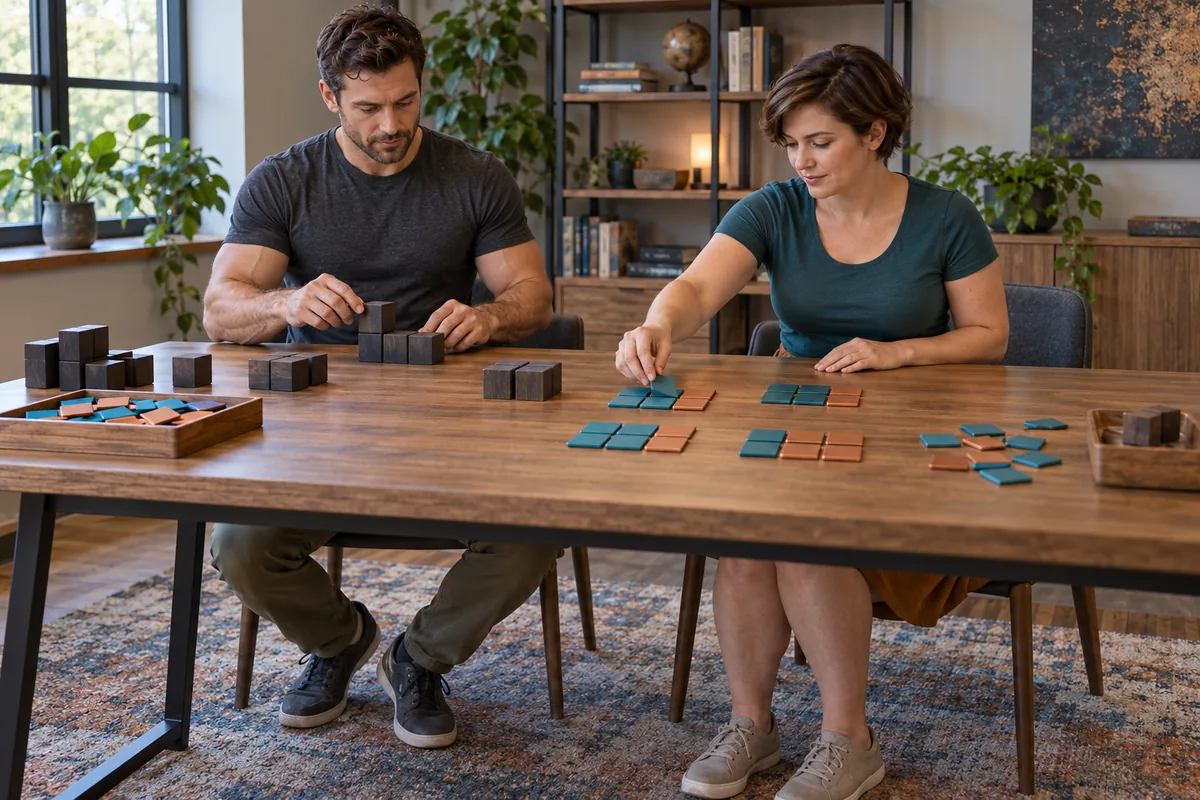



AI-generated concept imagery · imagined settings and equipment
Next review · October 2, 2026
Matched decimal, binary and hexadecimal sample activities
Queued · Lead: Ben Đ Om
Acceptance: Equal task content and exposure time; define scoring and transfer outcomes before recruiting.
Resources: Content design only. This is a planning allowance, not a funded commitment.
Download the experiment work pack · View the next work cycle
The vision
What this could become.
Explore number as a flexible language. Radix asks whether children who learn another base early develop different intuitions about place value, grouping, fractions, estimation, and computation—and whether those intuitions transfer to unfamiliar problems.
Begin today
The first concrete step.
Build equal-duration learning activities in decimal, binary, and hexadecimal. Start with adult usability testing, then develop a reviewed, age-appropriate study with parental permission and child assent, while maintaining ordinary educational access.
The LSM connection
Radix shares Atlas’s emphasis on exact representation and discrete structure. The educational hypothesis is independently testable and does not follow as a proven consequence of LSM. Number base changes representation, not the underlying quantity.
Current evidence & open ground
The research question is the effect of instruction, not a presumption that one base creates superior minds. Early non-decimal fluency, later learning, and genuinely native acquisition are different interventions and must be described separately.
Questions that move the work forward
- Does learning a second base improve transfer beyond practiced exercises?
- How can time, teacher attention, prior knowledge, and notation difficulty be balanced?
- Which effects remain after instruction ends and across different learners?
A is ten
The portfolio uses A for its tenth project and B for its eleventh—a small invitation to think in hexadecimal. A learning tool can let students group the same objects in several bases and discover what changes and what stays invariant.
Proposed milestones / not completed results
A path to evidence.
Make it learnable
A small set of manipulatives and games with matched content across bases.
Advance when: Test comprehension and usability before a larger study.
Compare fairly
A preregistered study with balanced instruction and blinded scoring where possible.
Advance when: Measure place-value reasoning, transfer, and engagement.
Follow development
A longitudinal proposal for early fluency in a second number system.
Advance when: Report retention, individual variation, and null results as well as gains.
Visitor feedback
Comments or suggestions?
Share your thoughts on Radix. Your message goes to the site owner’s private inbox.
No sign-in required. Your message and optional contact details are saved privately for review, not published. Add an email address if you would like a reply; a response is not guaranteed. Please avoid sensitive information.