Feasibility study
Neural Bridge
A clearer channel between intention and action.
Human-controlled interfaces connecting neural signals, digital assistance, and physical action.
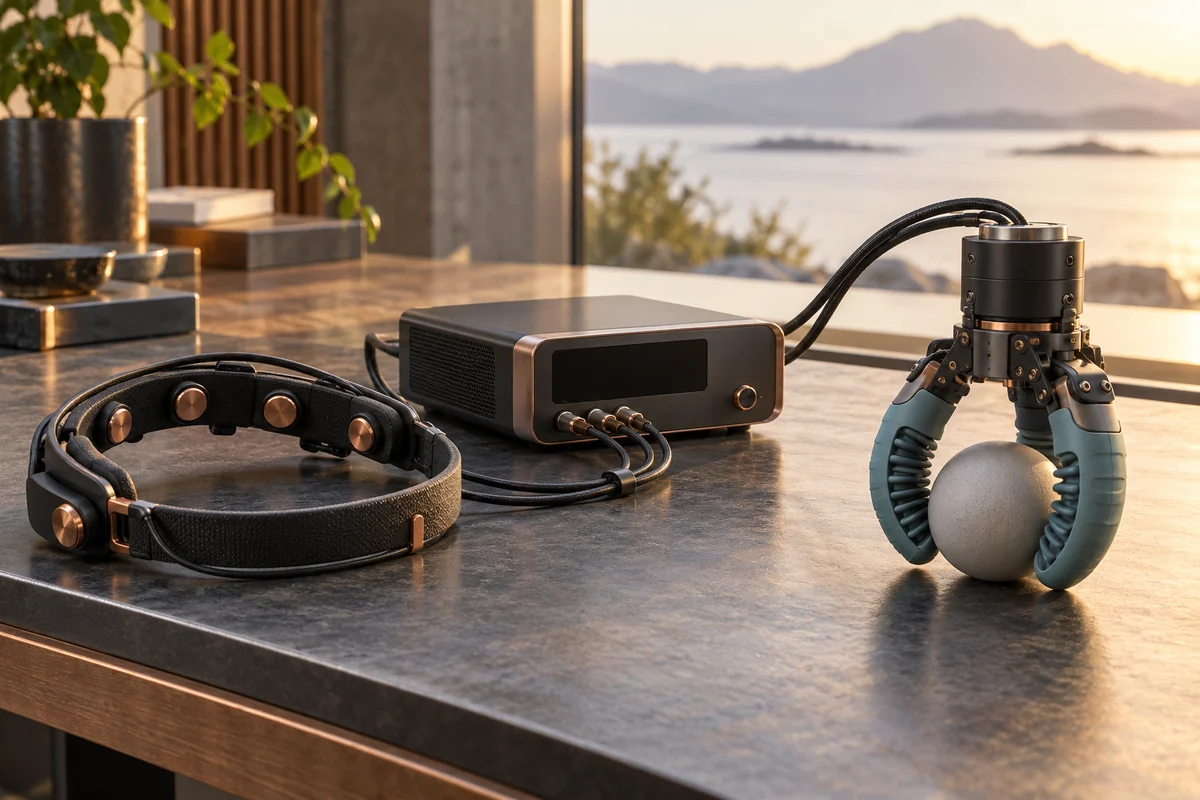


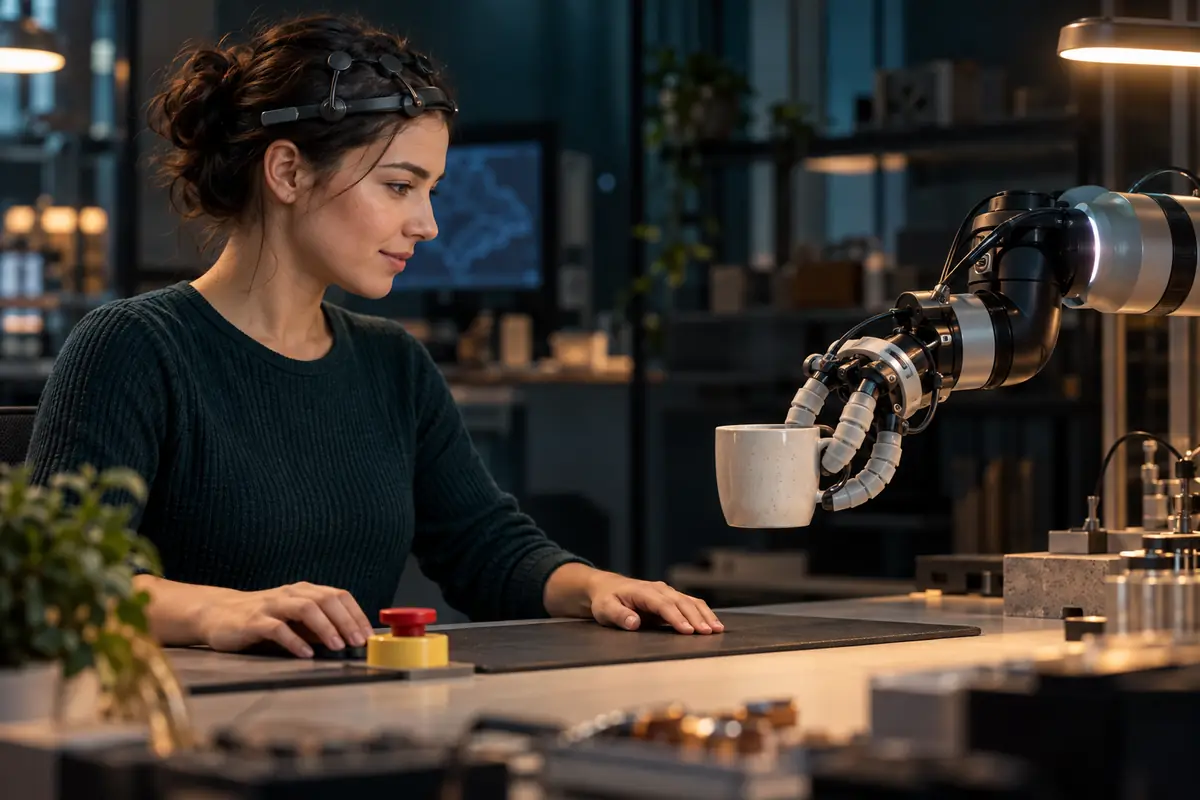

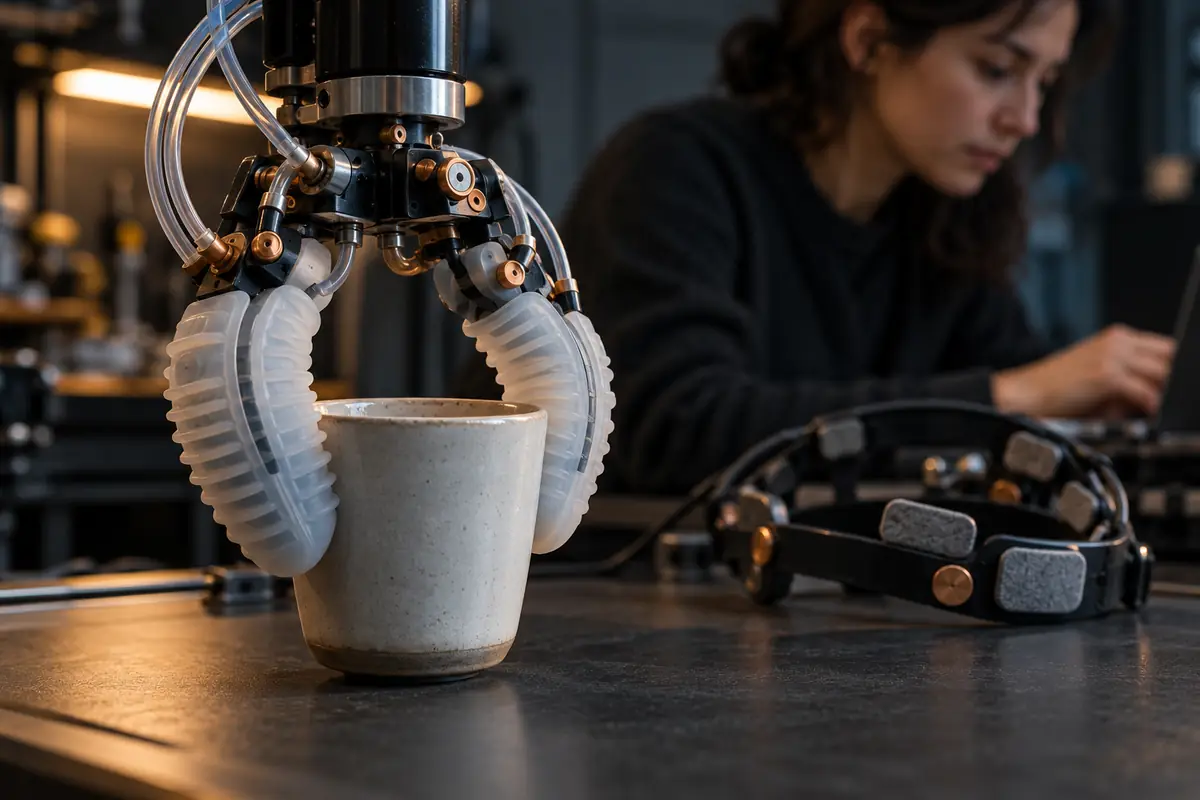
AI-generated concept imagery · imagined settings and equipment
Next review · October 2, 2026
A simulated cursor-selection task and ordinary-control baseline
Queued · Lead: Ben Đ Om
Acceptance: Declare task success, latency and error measures; no human study is started.
Resources: Simulation only. This is a planning allowance, not a funded commitment.
Download the experiment work pack · View the next work cycle
The vision
What this could become.
Make digital tools easier to direct and physical capabilities easier to extend. Neural Bridge investigates how a person can express intent to an interface and receive useful feedback, with the person retaining control of their body, information, and participation.
Begin today
The first concrete step.
Build the interaction model using recorded data or a simulator, then compare it with ordinary accessible controls. Define a bounded task such as cursor selection or assistive communication; any human research follows an appropriately reviewed protocol.
The LSM connection
LSM provides the broader program’s question about physical information and structure. No LSM-specific account of consciousness or neural coding has been established here. Interface performance must be measured independently of that interpretation.
Current evidence & open ground
Brain–computer interfaces have demonstrated bounded communication and control tasks in research settings. They do not demonstrate transfer of a digital mind into a human body, mind uploading, or identity continuity.
Nature (2025) — instantaneous voice-synthesis neuroprosthesis ↗A demonstrated brain-to-voice communication result, not evidence of consciousness transfer.
Questions that move the work forward
- What task improves when a neural channel is added to existing controls?
- How do uncertainty, latency, fatigue, and recalibration affect real use?
- Can the user immediately stop, inspect, and revoke every actuation and data-sharing channel?
A bridge has two directions
Study intent decoding and feedback separately before combining them. Keep a readable record of what the interface inferred, what the user confirmed, and what the device actually did.
Proposed milestones / not completed results
A path to evidence.
Specify intent
An accessible interaction prototype using simulated or consented existing data.
Advance when: Measure task success and errors against a simple control baseline.
Close the loop
A bounded feedback and actuation study with qualified collaborators.
Advance when: Report latency, calibration burden, user agency, and failure recovery.
Extend capability
A carefully scoped assistive application.
Advance when: Require reproducible user benefit and explicit ongoing consent.
Visitor feedback
Comments or suggestions?
Share your thoughts on Neural Bridge. Your message goes to the site owner’s private inbox.
No sign-in required. Your message and optional contact details are saved privately for review, not published. Add an email address if you would like a reply; a response is not guaranteed. Please avoid sensitive information.